

DAE-Saha Institute of Nuclear Physics
Nuclear Architecture and Mechanics Lab

Our Research Center
The Team
The Sengupta Lab is a research lab dedicated to studying the effects of lamin-A in laminopathies and ovarian cancer. Our goal is to use cutting-edge technology and techniques to better understand the underlying biology of these diseases, leading to the development of novel diagnostic and therapeutic strategies.
We have a team of dedicated researchers and students who are passionate about pushing the boundaries of science and improving the lives of those affected by these diseases. We invite you to explore our site and learn more about our work.
Supervisor

Kaushik Sengupta, PhD
Professor,
Biophysics & Structural Genomics Division,
3106, Phase III, Saha Institute of Nuclear Physics, Kolkata, India.
Kaushik Sengupta was born and brought up in the city of Kolkata, West Bengal, India. He obtained his Masters in Biochemistry from the University of Calcutta, India followed by an M. Tech. in Bio-medical Engineering from the Indian Institute of Technology (IIT) Bombay. He completed his PhD in Biochemistry in 2004 under the supervision of Prof. Heinz Rüterjans at the International Max Planck Research School / J.W. Goethe University of Frankfurt, Germany. After completing the degree, Kaushik went to Northwestern University Feinberg School of Medicine, USA to continue his Post-doctoral research in the laboratory of Prof. Robert D. Goldman where he did his extensive research on the nuclear intermediate filament protein, 'lamin-A'. Currently, Dr Sengupta is an Associate Professor in the Biophysics & Structural Genomics Division of Saha Institute of Nuclear Physics, Kolkata, India where he continues to investigate the different facets of lamins in health and disease.


The Scholars

Shreyasi Dey Sarkar
Senior Research Fellow
Joined in 2021, Shreyasi is currently working to identify the chromosome territory changes during ovarian cancer with an elevated lamin A expression, with insights from effects of surface topology.


Subhradip Nath
Senior Research Fellow
Joined in 2021, Subhradip is currently working in the field of mechanobiology to identify the defects in mechanotransduction and bioenergetics during lamin A mutations.

Rajarshi Roy
Senior Research Fellow
Joined in 2023, Rajarshi is currently working with role of lamin A in cell cycle regulation along with splicing machinery through studying laminopathic mutants.


Shaheena Parveen
Junior Research Fellow
Joined in 2025, Shaheena is currently working to identify the role of lamin A in regulation of polycomb group of proteins and epigenetics with insights from Ovarian Cancer

Senjuti Kunda Das
Junior Research Fellow
Joined in 2025, Senjuti is currently working in the field of telomere homeostasis and role of lamin A in maintaining telomere stability through orthogonal approaches.

Adrija Ponda
Junior Research Fellow
Joined in 2026, Adrija is currently working on understanding the spliceosome machinery and role of lamin A
Post-Doc

Dr Anwesha Das
2026-Present
Anwesha joined the lab in summer 2026 and is currently investigating mitochondrial defects and nucleo-mitochondrial communication in laminopathies. She is also involved in the development and characterization of patient-derived iPSC models.
The Alumni

Dr Duhita Sengupta
2018-2023

Dr Manindra Bera
2011-2016

Dr Pritha Bhattacharjee
2010-2015

Dr Chandrayee Mukherjee
2018-2023

Dr Avinanda Banerjee
2010-2015
Instruments and Facilities
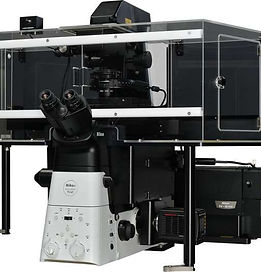
Super-resolution system that provides double the resolution of conventional light microscopes. Combining N-SIM and a confocal microscope allows the flexibility to select a location in the confocal image, and easily switch to view it in super-resolution, enabling the acquisition of more detail.
Inverted Super resolution Fluorescent Confocal Microscope (Nikon N-SIM)


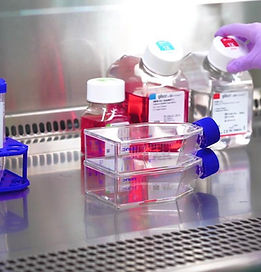
In our lab, we have access to cell culture facility completed with Level II BSC, CO2 incubator along with Accessories.
Cell Culture Facility


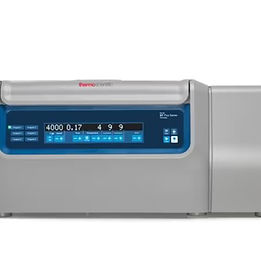
The ST4/ST4R Plus series centrifuges come standard with an easy-to-use keypad and high contrast LCD display. This high-capacity and versatile unit offers consistent performance and is ideal for routine applications.
Centrifuge (Sorvall ST4 Plus)